The exterior door is the calling card of every home, creating a first impression for both guests and passers-by. But an exterior door is not just an aesthetic element – it also plays an important role in security, thermal insulation and keeping energy costs under control. Choosing the right door may seem complicated at first, but in this blog post we cover the main factors you should consider when looking for an exterior door – from materials and design to security features and maintenance. If you are facing the challenge of choosing a new door, read on for useful tips and advice.
- Where will the door be installed (which direction does it face, is there a canopy, etc.)?
- What are the dimensions of the opening?
- What are the thermal insulation requirements?
- What are the requirements for locking solutions?
1. Canopy and orientation
The lifespan of an exterior door is extended by the door being protected from direct rain (water running down over the door) and strong sun. One of the main warranty conditions of most wooden door manufacturers (including our own factory) is that there must be a canopy above the door projecting at least 1 m from the wall and located no more than 0.5 m above the top edge of the door, or the door must be in a recess at least one metre deep. If such requirements cannot be met, it makes sense to consider an aluminium or PVC exterior door, which withstand such conditions better.
Another nuance is that outdoors most materials expand and contract depending on the weather. Sub-zero temperatures in winter, 30+ degrees in summer. Rain, wind and sun. Regardless of the material, doors move too. Whenever possible, especially on the south side of a building, it is important to protect the door from direct sun or, alternatively, consider a lighter-coloured door that absorbs less heat and light. This reduces the risk of the door “swelling shut” and the door leaf scraping against the frame.
Another solution to the same problem (the door moves in different seasons and the door leaf starts rubbing against the frame) is that wooden doors can use concealed hinges, which make it easy to adjust the door in all directions (the door leaf relative to the frame). Our own factory’s exterior doors can be ordered with concealed hinges.
High-quality Lävel Uksetehas exterior doors for houses
- We make doors exactly to the dimensions required
- A wide choice of finishing options
- A versatile choice of hardware
2. Dimensions
The typical exterior door opening in a new building is 1000 x 2100 mm, and as a result the vast majority of manufacturers make standard-size doors for exactly a 1000 x 2100 mm opening, which means the outer frame size in that case is usually 990 x 2090 mm. However, if you need a different size, a non-standard door is also more expensive.
In our own factory we make both exterior doors and interior doors in exactly the dimensions required, and the price of the door does not change up to an outer frame size of 980 x 2090. So, let’s say you need a door with an outer frame size of 965 x 2070 – if you order it from us, it still costs the same as a standard-size door. However, if the frame is wider than 980 mm or taller than 2090 mm, a surcharge applies. The maximum height of an exterior door we can produce in one piece is 2700 mm.
So when calculating dimensions, an installation gap of 10–15 mm is usually left on both sides and at the top – if the opening is 1000 x 2100 mm, a door with a frame size of 980 x 2090 mm fits well.

Our own factory’s exterior doors can also be combined with glazed or solid transoms. The maximum opening size for which we can produce a wooden exterior door solution is 3000 x 3000 mm. The door section is a metre wide, and so are the side transoms. We can make the door in one piece up to 2700 mm high, and glass transoms up to 3000 mm.
3. Thermal insulation, i.e. U-value
The U-value (thermal transmittance) is one way of measuring how well something keeps heat in or out. Imagine you have a house and you want it to be warm inside in winter and cool in summer.
Think of a door or window, for example:
- If the door lets a lot of heat through, warm air escapes through the door in winter and hot air comes in during the summer.
- If the door retains heat well, it does not let warm air out in winter or hot air in during the summer.
The U-value shows how well a material (for example a door, window glass, wall or roof) retains heat. The lower the U-value, the better the material is at retaining heat. This means it keeps the heat inside the house in winter and keeps the heat out in summer.
For example:
- Low U-value (e.g. 1): good thermal insulation, retains heat well.
- High U-value (e.g. 5): poor thermal insulation, lets heat through easily.
So if you want your house to be pleasantly warm in winter and cool in summer, choose materials with a low U-value.
Our own factory’s glazed wooden exterior doors have a U-value of 0.90 W/m2K, and doors without glass 0.85 W/m2K. Aluminium and PVC exterior doors are in the same range. By comparison, the thermal transmittance of an ordinary flush metal door is typically around 1.5–1.6 W/m2K, which means a wooden door is twice as warm. Hence our recommendation not to use flush metal where thermal insulation is important.
4. Locking solution for the exterior door
There are many locking solutions for different situations and uses. In the context of a private house, however, the topic can be roughly divided into three.
The door has handles on both sides, opens from outside with a key and from inside with a thumb turn. This is arguably the most reliable and also the most budget-friendly option. Such a solution consists of a mechanical lock frame, strike plate, cylinder, cylinder cover set and door handle. The most typical solution is an ASSA 565 lock frame, ASSA 256 cylinder covers and an ASSA 1301 Scandinavian cylinder with three keys. For this set you can choose between different Scandinavian-standard exterior door handles and finishes (matt chrome, polished chrome, matt brass, black, etc.).
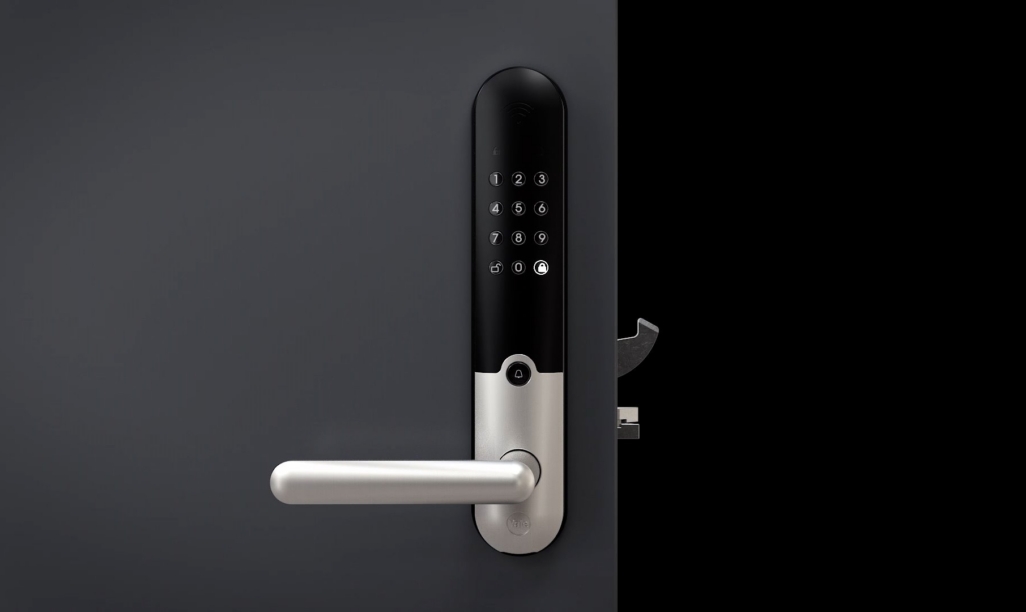
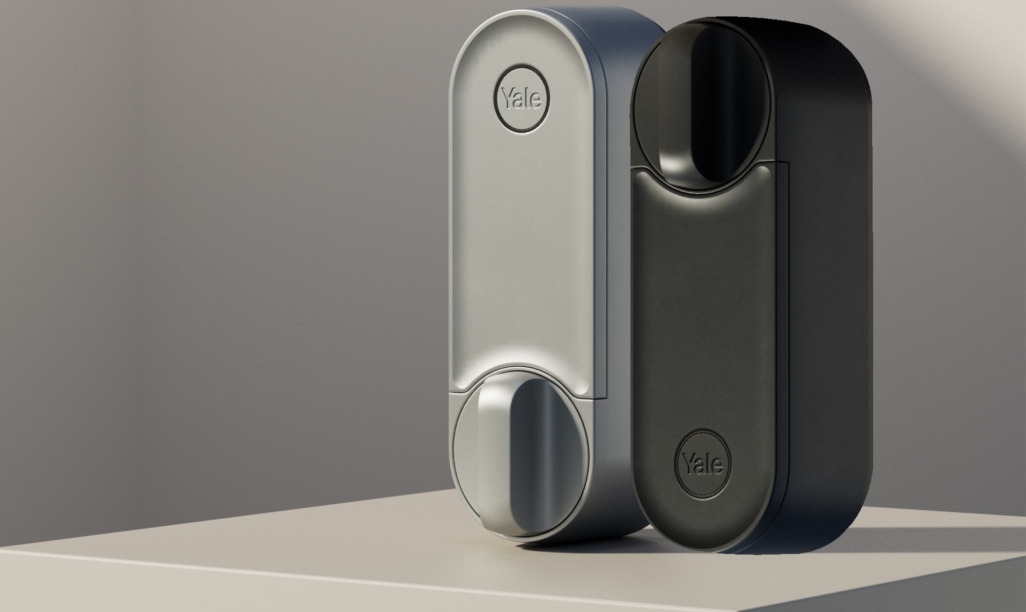
The door opens from outside with a code, tag or app, and from inside with a thumb turn. The main solution we offer here is the Yale Doorman L3.

The main advantage of the Doorman is that you do not need a key at all to open the door. The Doorman can also be opened remotely via the app, or you can share a code with someone that is only valid for a certain period. The Doorman is also available in three surface finishes: black, brushed stainless steel and polished stainless steel. This solution is particularly well suited to families with children – the issue of keys or getting into the house disappears completely. You can read more about the Doorman here: https://www.yalehome.com/ee/et/smart-home/smart-locks/yale-doorman/yale-doorman-l3s
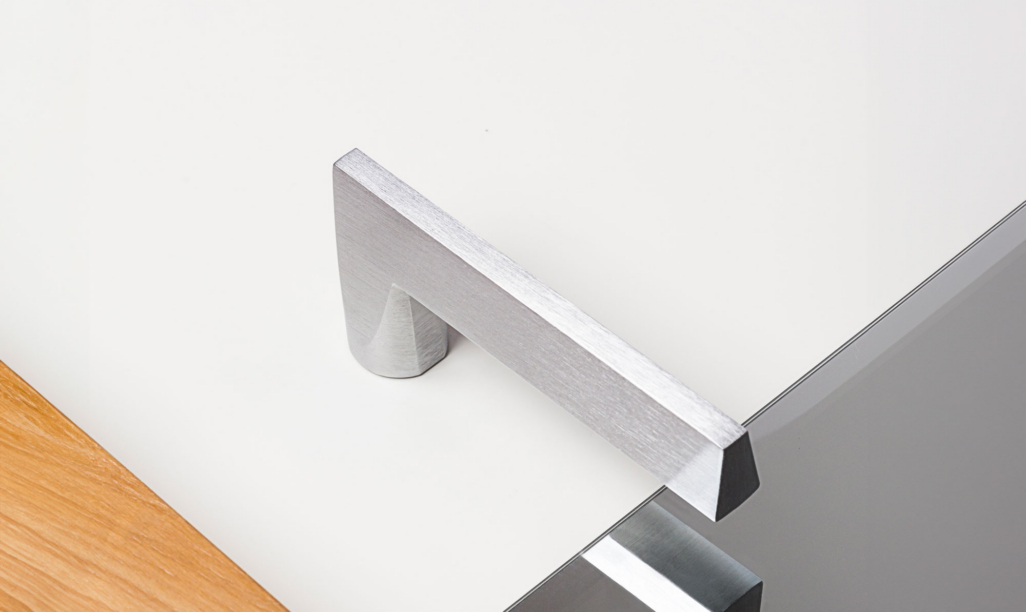
The door has a stainless steel pull handle inside and out, opens from outside with a key and from inside with a thumb turn. In recent years, stainless steel pull handles have become increasingly popular on the main entrance doors of private houses. We work with the Estonian handle manufacturer Diamantek, whose range can be used on Lävel Uksetehas products.
Order high-quality exterior doors for your house directly from the Lävel door factory!
- You can order a door that suits your dream home in every way.
- Fire doors and security doors are also available.
- Transport and installation throughout Estonia.